Economics
Beginner
Updated 11/26/2025
What is
Fair Launch?
A cryptocurrency launch with no pre-mine, no ICO, and no insider allocation - all coins are earned through mining from day one.
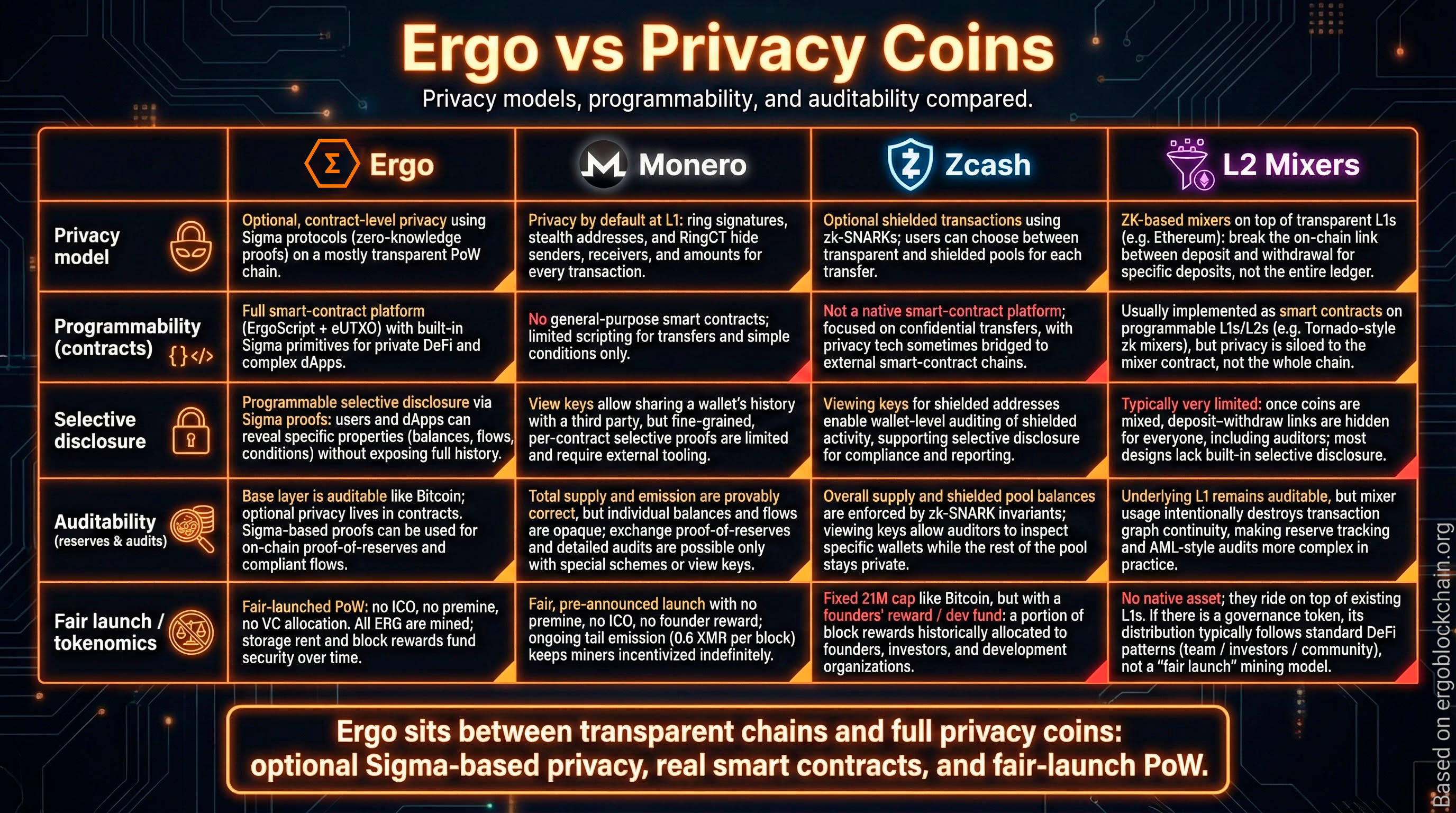
Fair Launch refers to a cryptocurrency's distribution model where there's no pre-mine (coins created before public launch), no ICO/private sale (coins sold to investors), and no team allocation. All coins are distributed through the same mechanism available to everyone - typically mining. Ergo and Bitcoin are examples of fair-launched cryptocurrencies.
Key Points
- No pre-mine: zero coins created before launch
- No ICO: no private/public token sales
- No team/VC allocation: founders mine like everyone else
- All ERG earned through Proof-of-Work mining
- Aligns with Bitcoin's distribution model
- Maximizes decentralization from day one
Use Cases
1
Ensuring no insider advantage
2
Building community trust
3
Regulatory clarity (not a security)
4
True decentralization of ownership
Technical Details
Ergo launched on July 1, 2019 with block #1. The treasury receives 7.5% of block rewards (decreasing over time) for ecosystem development, but this is transparent, on-chain, and community-governed - not a pre-mine or founder allocation.
Related Infographics



Related Articles
Frequently Asked Questions
Questions about Fair Launch
Common questions about this topic
What can I do with Ergo?
Ergo supports a full ecosystem: trade on Spectrum DEX, use SigmaUSD stablecoin, mix transactions with ErgoMixer, collect NFTs on SkyHarbor, mine with GPUs, lend/borrow on DuckPools, bridge to other chains via Rosen, and build dApps with ErgoScript. It's a complete platform for decentralized finance and applications.
Explainer
Getting Started
Is Ergo a good investment?
This is not financial advice. Ergo has strong fundamentals: fair launch (no VC dump risk), innovative technology (eUTXO, Sigma Protocols, NiPoPoWs), active development, and a cypherpunk ethos. It's a smaller market cap project with higher risk/reward than established chains. Research thoroughly, understand the technology, and never invest more than you can afford to lose.
Comparison
Getting Started
Why does Ergo's fair launch matter?
Ergo had no pre-mine, no ICO, no VC allocation. 100% of ERG comes from mining. This means no insiders dumping on you, no VCs controlling governance, no foundation with majority stake. Fair launch creates genuine decentralization - the network belongs to miners and users, not early investors seeking exit liquidity.
Philosophy
Philosophy
What is MEV resistance and why does Ergo have it?
MEV (Maximal Extractable Value) is profit extracted by reordering, inserting, or censoring transactions - think front-running and sandwich attacks. Ergo's eUTXO model provides structural MEV resistance: transactions reference specific boxes (UTXOs), making reordering attacks much harder. There's no shared global state to exploit like in account-based chains.
Explainer
Technology