Economics
Intermediate
Updated 11/26/2025
What is
Storage Rent?
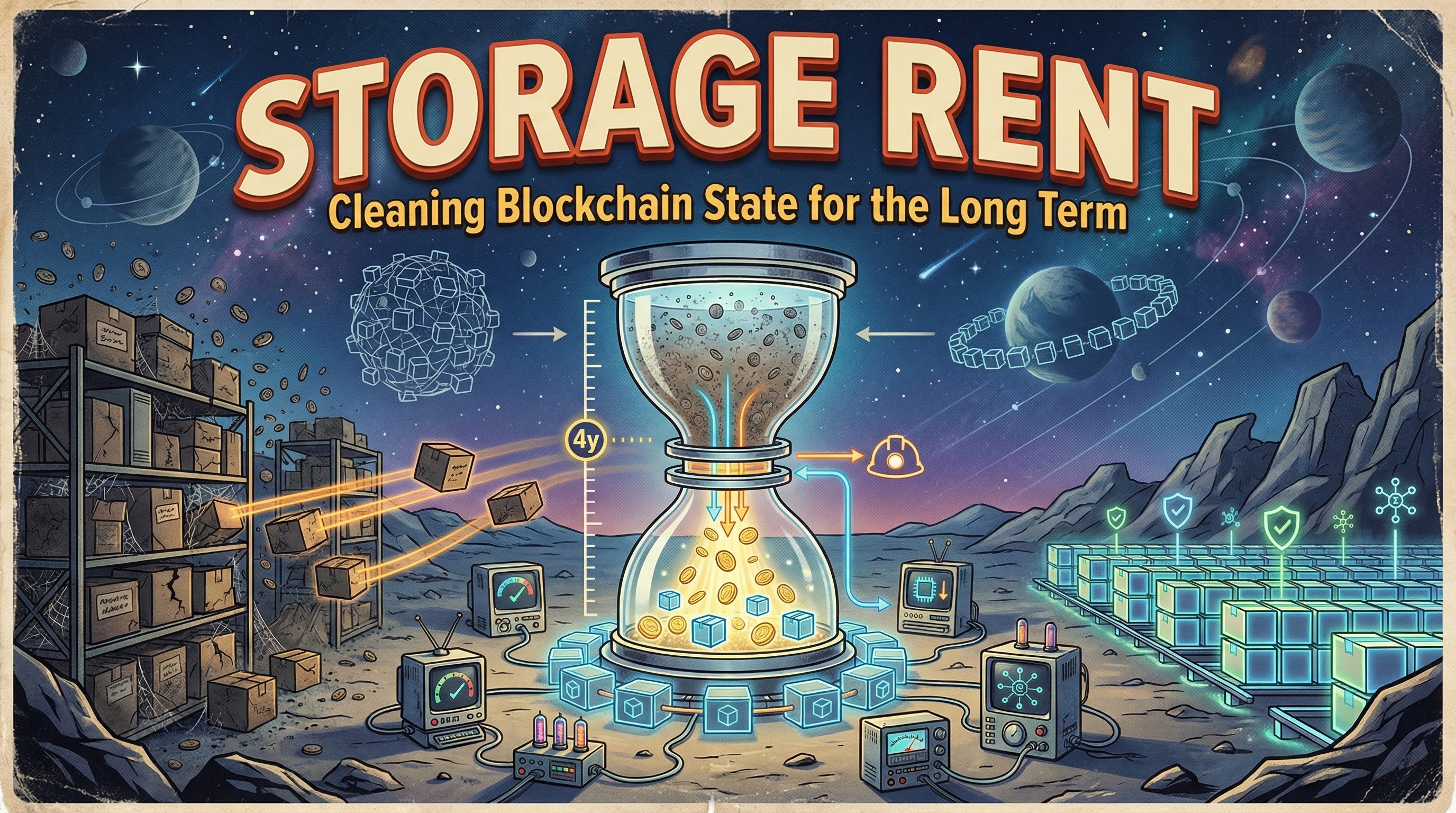
Ergo's mechanism where inactive UTXOs pay small fees after ~4 years, preventing state bloat and providing sustainable miner revenue.
Storage Rent is Ergo's protocol-level solution to blockchain state bloat. Boxes (UTXOs) that remain unspent for approximately 4 years become eligible for a small fee deduction by miners. This incentivizes cleaning up dust, funds long-term network security, and ensures the blockchain remains lightweight and decentralized.
Key Points
- Applies to boxes inactive for ~4 years (1,051,200 blocks)
- Miners can claim small fees from dormant boxes
- Prevents state bloat that plagues other chains
- Provides sustainable miner revenue beyond block rewards
- Lost coins eventually return to circulation
- Keeps full node requirements manageable
Use Cases
1
Automatic dust cleanup (tiny UTXOs)
2
Recovery of lost coins over time
3
Sustainable security budget for miners
4
Keeping full nodes accessible
Technical Details
After 1,051,200 blocks (~4 years), a box's storage rent equals 0.14 ERG per 1KB of box size. Miners can include a 'storage rent collection' transaction that either: (1) reduces the box value by the rent amount, or (2) if value < rent, claims the entire box. Users can reset the timer by moving their funds.
Related Infographics


Related Articles
Frequently Asked Questions
Questions about Storage Rent
Common questions about this topic
Is Ergo a good investment?
This is not financial advice. Ergo has strong fundamentals: fair launch (no VC dump risk), innovative technology (eUTXO, Sigma Protocols, NiPoPoWs), active development, and a cypherpunk ethos. It's a smaller market cap project with higher risk/reward than established chains. Research thoroughly, understand the technology, and never invest more than you can afford to lose.
Comparison
Getting Started
What is storage rent on Ergo?
Storage rent is Ergo's solution to state bloat. Boxes (UTXOs) that remain unspent for 4+ years can have a small fee deducted by miners. This incentivizes cleaning up unused state, provides long-term miner revenue after emission ends, and keeps the blockchain sustainable. Lost coins eventually return to circulation instead of being locked forever.
Explainer
Technology
How to get started with Ergo?
Start by getting a wallet (Nautilus for browser, Terminus for mobile). Back up your seed phrase securely offline. Get some ERG from an exchange (Gate.io, KuCoin) or DEX (Spectrum). Make a test transaction. Then explore: try DeFi on Spectrum, check out NFTs, or dive into the technology if you're a builder.
How-to
Getting Started
What is storage rent on Ergo?
Storage rent is Ergo's mechanism for long-term sustainability. Boxes (UTXOs) that remain unspent for ~4 years pay a small fee, which goes to miners. This prevents state bloat, recirculates lost coins, and ensures miners have income even after emission ends. It's like paying rent for blockchain storage space.
Explainer
Technology