Smart Contracts
Intermediate
Updated 1/15/2025
What is
EVM (Ethereum Virtual Machine)?
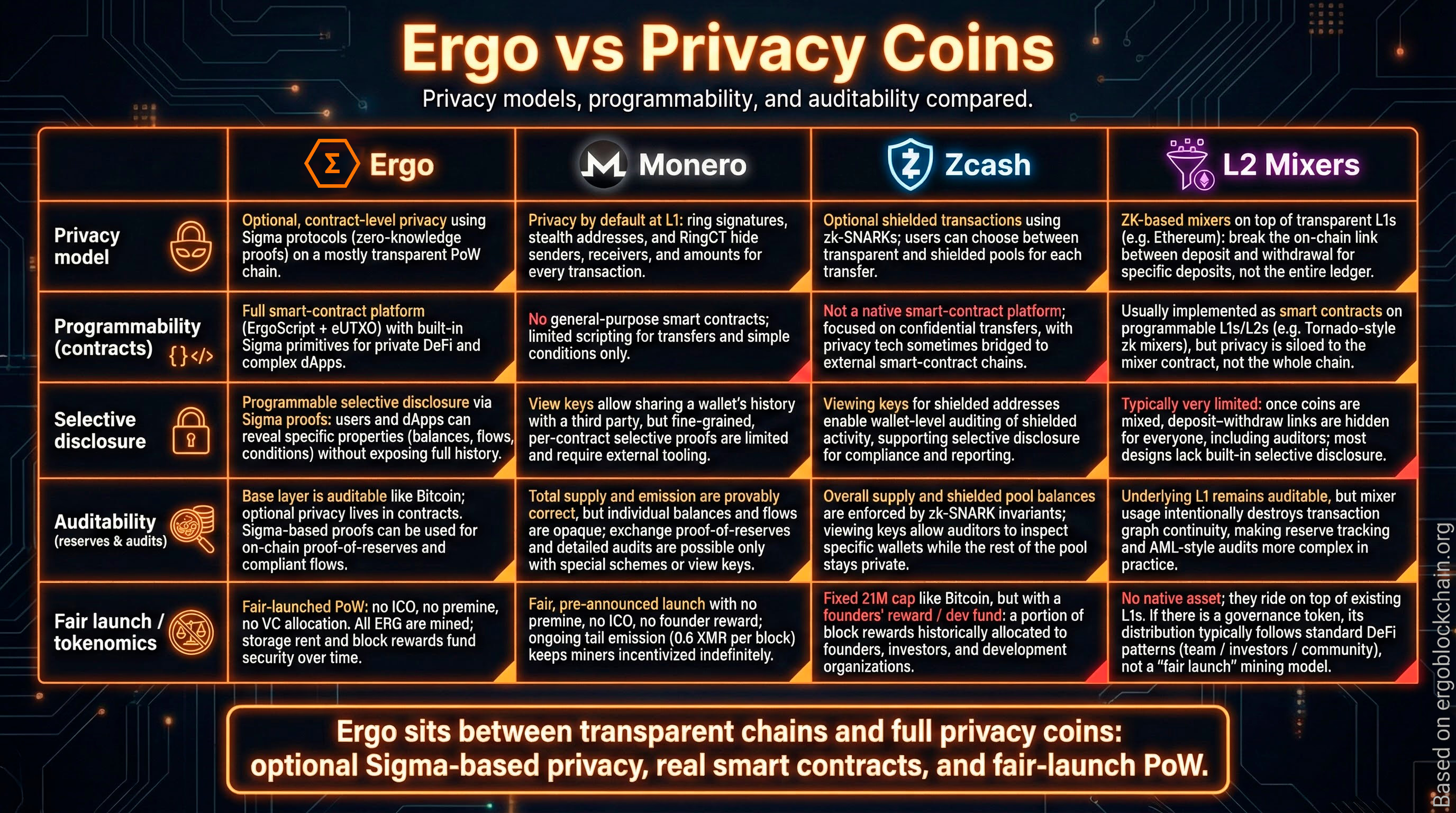
The runtime environment for Ethereum smart contracts - a global computer that executes Solidity code. Ergo uses a different model (ErgoScript on eUTXO) with distinct advantages.
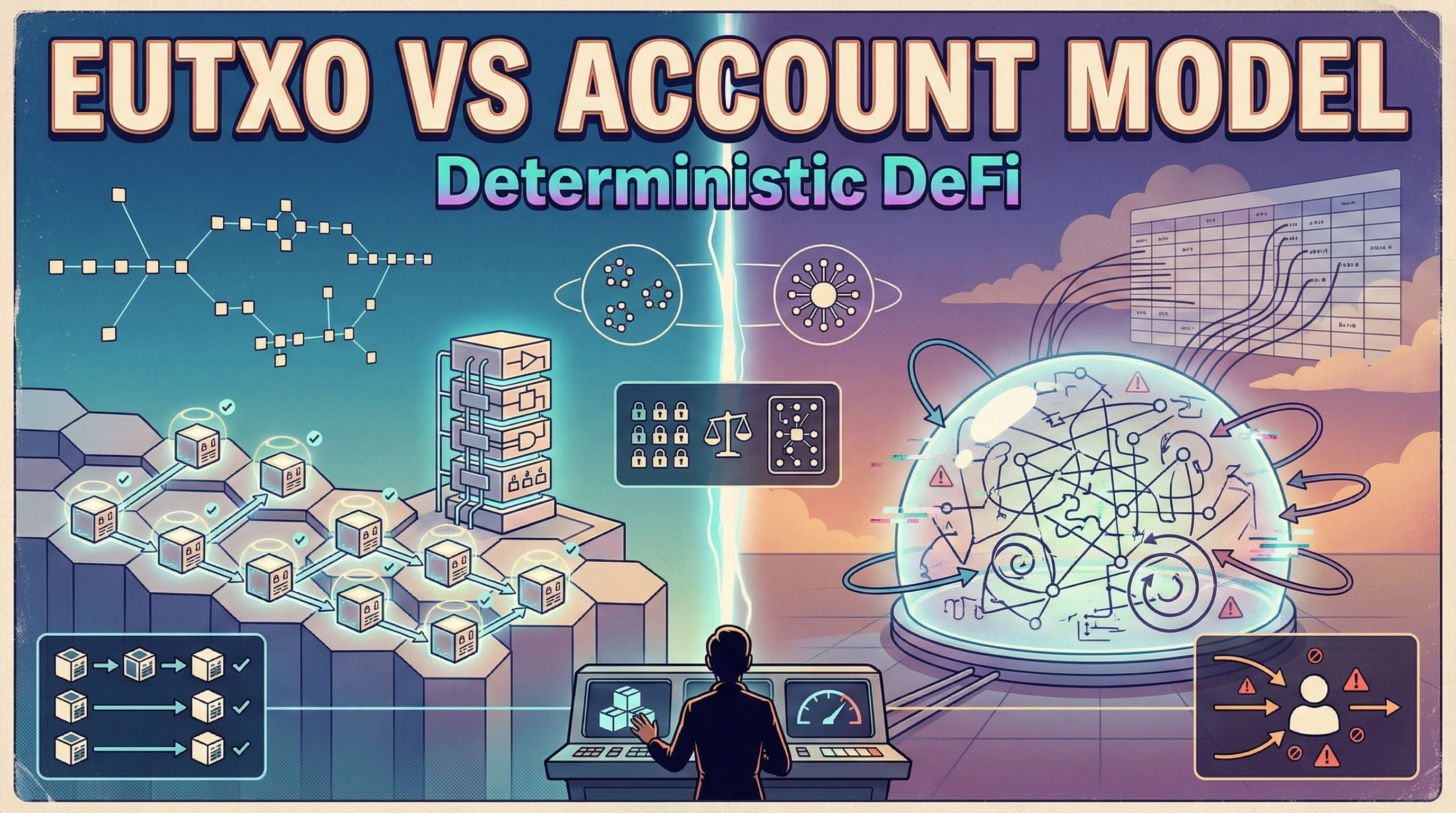
The Ethereum Virtual Machine (EVM) is a Turing-complete, stack-based execution environment that runs smart contracts on Ethereum and EVM-compatible chains. It processes Solidity bytecode in a global state machine where all nodes execute the same computations. While EVM has a large ecosystem, it has limitations: reentrancy vulnerabilities, MEV exploitation, and unpredictable gas costs. Ergo chose a different path with ErgoScript on the eUTXO model, offering deterministic execution, MEV-resistance, and enhanced security by design.
Key Points
- Turing-complete execution environment for Solidity contracts
- Account-based model with global shared state
- Vulnerable to reentrancy attacks and MEV exploitation
- Gas costs can be unpredictable during network congestion
- Ergo uses ErgoScript on eUTXO instead - different paradigm
- EVM ecosystem is larger but has inherent design tradeoffs
Use Cases
1
Understanding Ethereum smart contract execution
2
Comparing Ergo's approach vs EVM chains
3
Evaluating security tradeoffs between models
4
Cross-chain development considerations
Technical Details
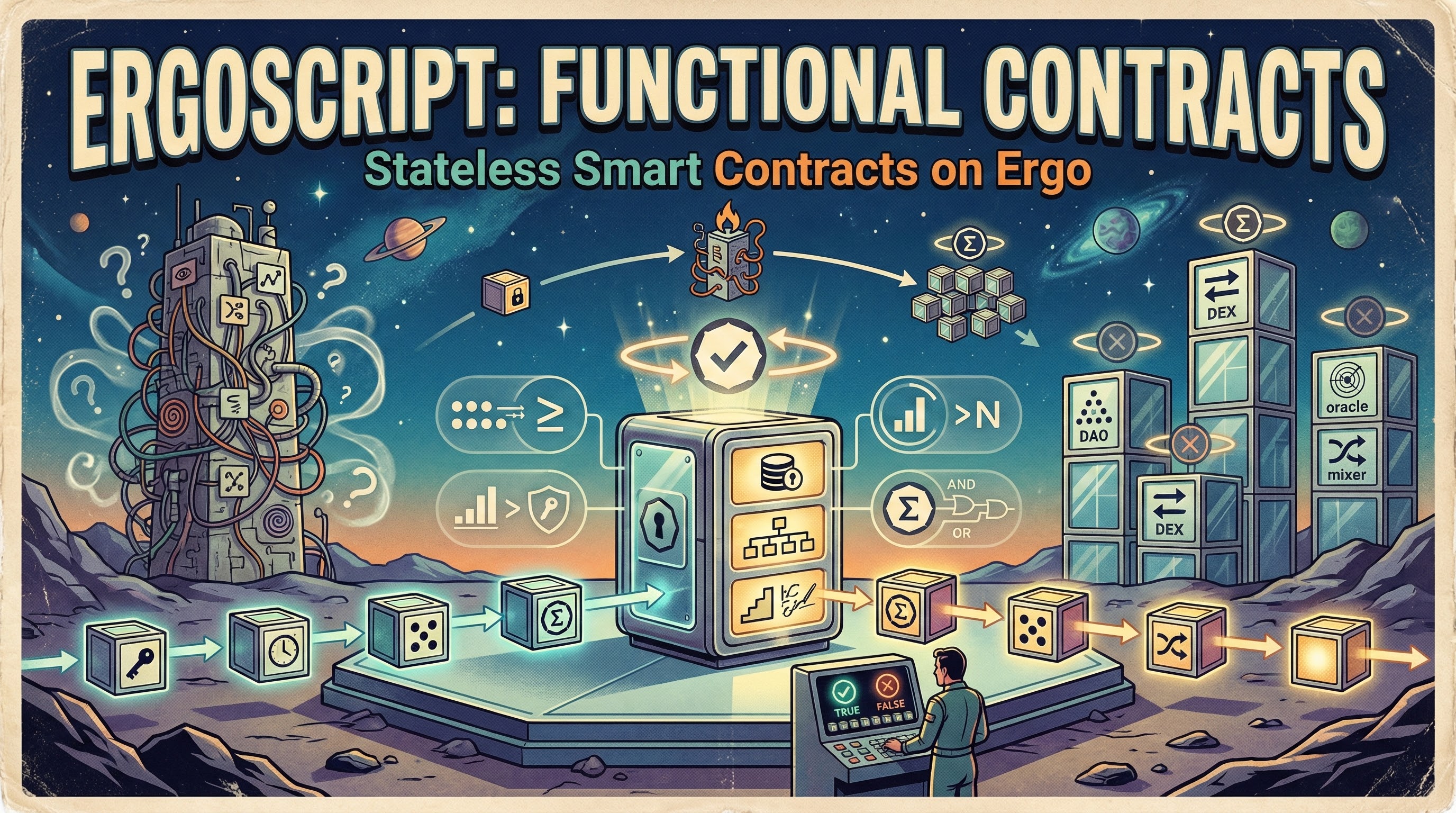
The EVM uses a stack-based architecture with 256-bit words, executing opcodes from compiled Solidity. State changes are atomic within transactions but the global state introduces concurrency issues. Ergo's ErgoScript runs on the eUTXO model where each 'box' is independent - no shared state means no reentrancy, deterministic gas costs, and natural parallelization. ErgoScript is not Turing-complete by design, avoiding infinite loops while still enabling complex DeFi.
Related Infographics



Related Articles


Frequently Asked Questions
Questions about EVM (Ethereum Virtual Machine)
Common questions about this topic
What's the difference between Ergo and Cardano?
Both use eUTXO, but differ in consensus and philosophy. Ergo: PoW (Autolykos), fair launch, no VC funding, storage rent. Cardano: PoS (Ouroboros), VC-funded, larger ecosystem. Ergo prioritizes decentralization and sustainability; Cardano prioritizes academic rigor and institutional adoption.
Comparison
Technology
What can I do with Ergo?
Ergo supports a full ecosystem: trade on Spectrum DEX, use SigmaUSD stablecoin, mix transactions with ErgoMixer, collect NFTs on SkyHarbor, mine with GPUs, lend/borrow on DuckPools, bridge to other chains via Rosen, and build dApps with ErgoScript. It's a complete platform for decentralized finance and applications.
Explainer
Getting Started
Is Ergo a good investment?
This is not financial advice. Ergo has strong fundamentals: fair launch (no VC dump risk), innovative technology (eUTXO, Sigma Protocols, NiPoPoWs), active development, and a cypherpunk ethos. It's a smaller market cap project with higher risk/reward than established chains. Research thoroughly, understand the technology, and never invest more than you can afford to lose.
Comparison
Getting Started
What is the best GPU for Ergo mining?
For Ergo mining, GPUs with high memory bandwidth perform best. Popular choices include NVIDIA RTX 3060 Ti, 3070, 3080, and AMD RX 6800 XT. Minimum 4GB VRAM required. The best GPU depends on your budget, electricity cost, and availability. Efficiency (hashrate per watt) matters more than raw hashrate.
Explainer
Mining