Mining
Beginner
Updated 1/15/2025
What is
ASIC (Application-Specific Integrated Circuit)?
A specialized hardware chip designed exclusively for cryptocurrency mining, offering high efficiency but often leading to mining centralization.
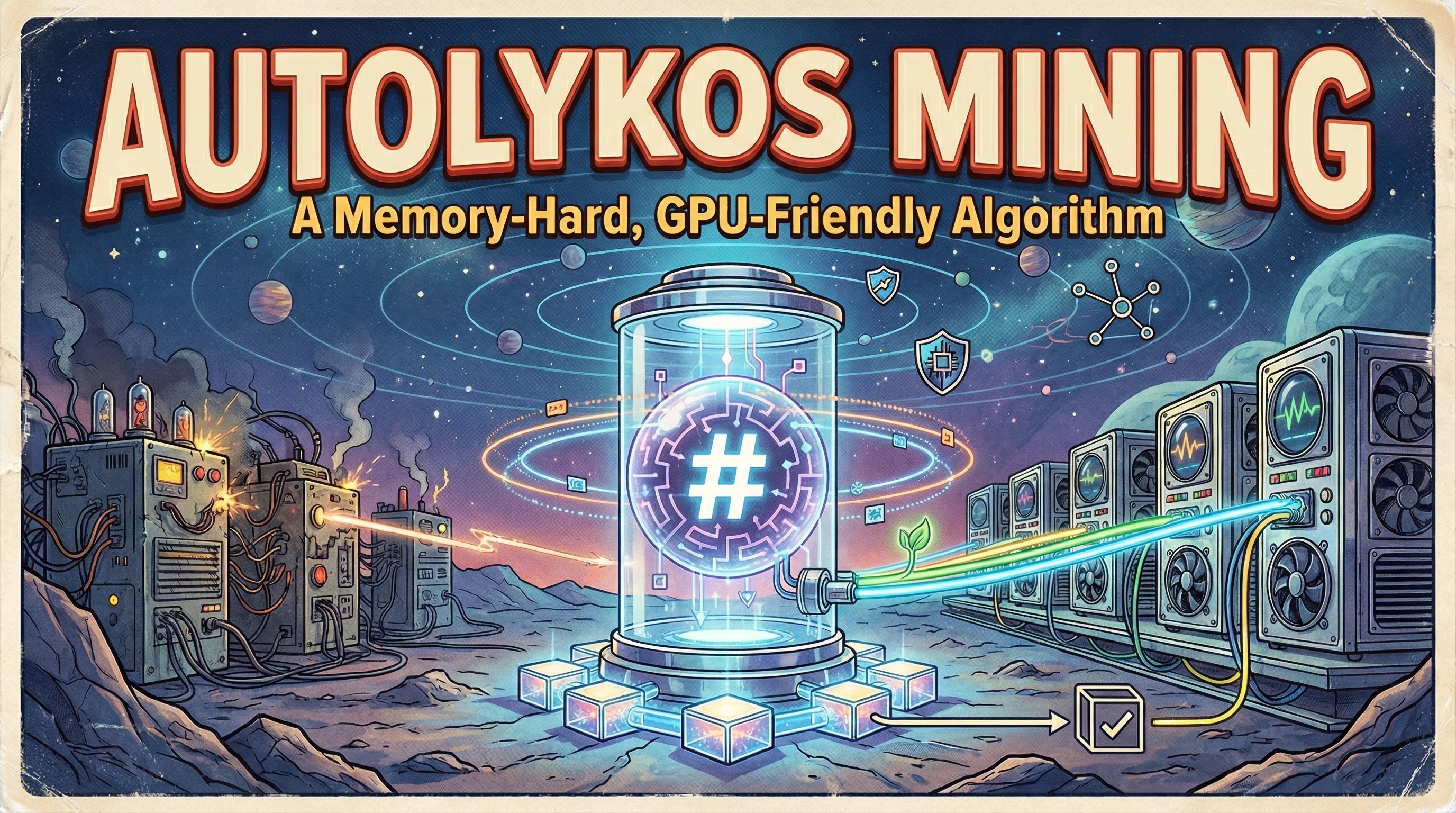
An ASIC (Application-Specific Integrated Circuit) is a microchip designed for a specific purpose rather than general computing. In cryptocurrency, ASICs are built exclusively to mine particular algorithms (like SHA-256 for Bitcoin), offering 100-1000x more efficiency than GPUs. While ASICs maximize mining profitability, they tend to centralize mining power among wealthy entities who can afford expensive specialized hardware. Ergo uses the Autolykos algorithm which is designed to be ASIC-resistant, allowing GPU miners to compete fairly.
Key Points
- ASICs are 100-1000x more efficient than GPUs for specific algorithms
- High cost ($2,000-$15,000+) creates barriers to entry
- Lead to mining centralization and manufacturer dependency
- Cannot be repurposed for other algorithms or tasks
- Ergo's Autolykos is designed to resist ASIC development
- GPU mining promotes decentralization and accessibility
Use Cases
1
Bitcoin mining (SHA-256 ASICs dominate)
2
Litecoin mining (Scrypt ASICs)
3
Understanding why Ergo chose ASIC-resistance
4
Evaluating mining profitability and hardware choices
Technical Details
ASICs achieve high efficiency by implementing mining algorithms directly in silicon, eliminating the overhead of general-purpose computing. However, this specialization means ASICs become worthless if the algorithm changes or the coin becomes unprofitable. Ergo's Autolykos 2 algorithm uses memory-hard computations requiring 2.5GB+ VRAM, making ASIC development economically impractical while remaining efficient on consumer GPUs.
Related Infographics


Related Articles

Frequently Asked Questions
Questions about ASIC (Application-Specific Integrated Circuit)
Common questions about this topic
How to get started with Ergo?
Start by getting a wallet (Nautilus for browser, Terminus for mobile). Back up your seed phrase securely offline. Get some ERG from an exchange (Gate.io, KuCoin) or DEX (Spectrum). Make a test transaction. Then explore: try DeFi on Spectrum, check out NFTs, or dive into the technology if you're a builder.
How-to
Getting Started
What can I do with Ergo?
Ergo supports a full ecosystem: trade on Spectrum DEX, use SigmaUSD stablecoin, mix transactions with ErgoMixer, collect NFTs on SkyHarbor, mine with GPUs, lend/borrow on DuckPools, bridge to other chains via Rosen, and build dApps with ErgoScript. It's a complete platform for decentralized finance and applications.
Explainer
Getting Started
What is Autolykos and how does it work?
Autolykos is Ergo's memory-hard Proof-of-Work algorithm designed for GPU mining. It requires significant RAM (currently ~2.5GB), making ASIC development uneconomical. Autolykos v2 (current version) allows pool mining while maintaining ASIC resistance. The algorithm promotes decentralization by keeping mining accessible to consumer hardware.
Explainer
Mining
What is the best GPU for Ergo mining?
For Ergo mining, GPUs with high memory bandwidth perform best. Popular choices include NVIDIA RTX 3060 Ti, 3070, 3080, and AMD RX 6800 XT. Minimum 4GB VRAM required. The best GPU depends on your budget, electricity cost, and availability. Efficiency (hashrate per watt) matters more than raw hashrate.
Explainer
Mining