Scalability
Intermediate
Updated 1/15/2025
What is
Blockchain Pruning?
Technique to reduce node storage by discarding old blockchain data while keeping cryptographic proofs. Ergo's NiPoPoWs enable efficient pruned nodes.
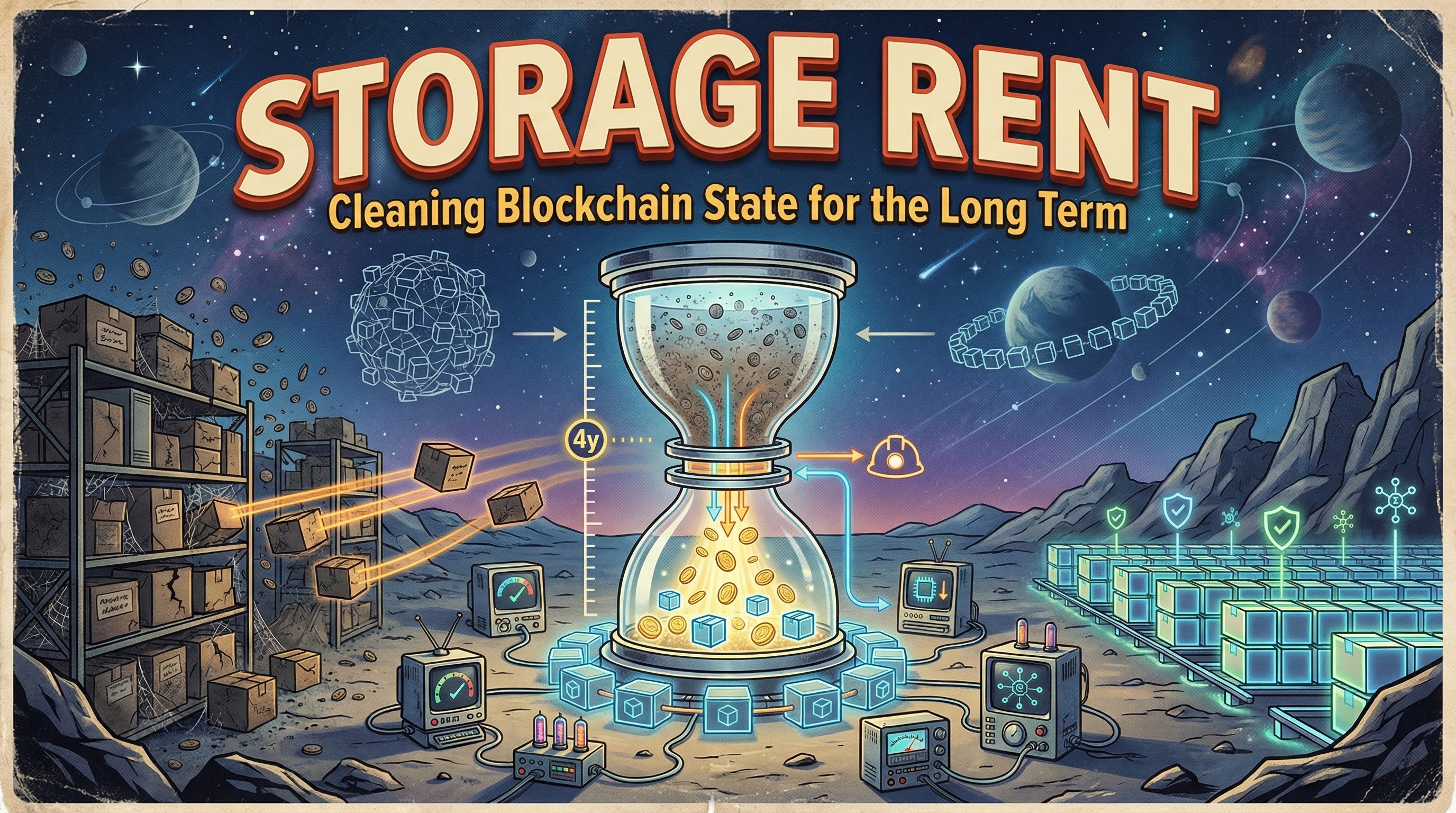
Blockchain pruning is a technique that allows nodes to discard historical transaction data while retaining the ability to verify the chain's validity. Instead of storing the entire blockchain history (which can be hundreds of gigabytes), pruned nodes keep only recent data and cryptographic proofs of older blocks. Ergo's NiPoPoWs (Non-Interactive Proofs of Proof-of-Work) enable particularly efficient pruning - nodes can verify the entire chain history using proofs of just a few kilobytes, making it practical to run nodes on resource-constrained devices.
Key Points
- Reduces node storage requirements significantly
- Keeps cryptographic proofs of discarded data
- Ergo's NiPoPoWs enable efficient verification
- Allows nodes on limited hardware
- Maintains security through cryptographic proofs
- Different from light clients (still validates)
Use Cases
1
Running nodes on limited storage devices
2
Reducing infrastructure costs
3
Enabling more decentralized node operation
4
Mobile or embedded node implementations
Technical Details
Ergo nodes can prune historical UTXO data while keeping block headers and NiPoPoW proofs. The UTXO set (current spendable outputs) is always maintained. Pruned nodes can still validate new blocks and transactions but cannot serve historical data to other nodes. NiPoPoWs compress proof of the entire chain into logarithmic size, enabling verification without full history.
Related Infographics


Related Articles
Frequently Asked Questions
Questions about Blockchain Pruning
Common questions about this topic
Is Ergo a good investment?
This is not financial advice. Ergo has strong fundamentals: fair launch (no VC dump risk), innovative technology (eUTXO, Sigma Protocols, NiPoPoWs), active development, and a cypherpunk ethos. It's a smaller market cap project with higher risk/reward than established chains. Research thoroughly, understand the technology, and never invest more than you can afford to lose.
Comparison
Getting Started
How to escape financial repression with Ergo?
Ergo provides tools for financial sovereignty: self-custody with no third parties, censorship-resistant transactions via PoW, optional privacy with Sigma Protocols, and programmable money without permission. Unlike VC-backed chains, Ergo has no central authority that can freeze funds or comply with sanctions. Your keys, your coins, your freedom.
Solution
Philosophy
What are NiPoPoWs and why do they matter?
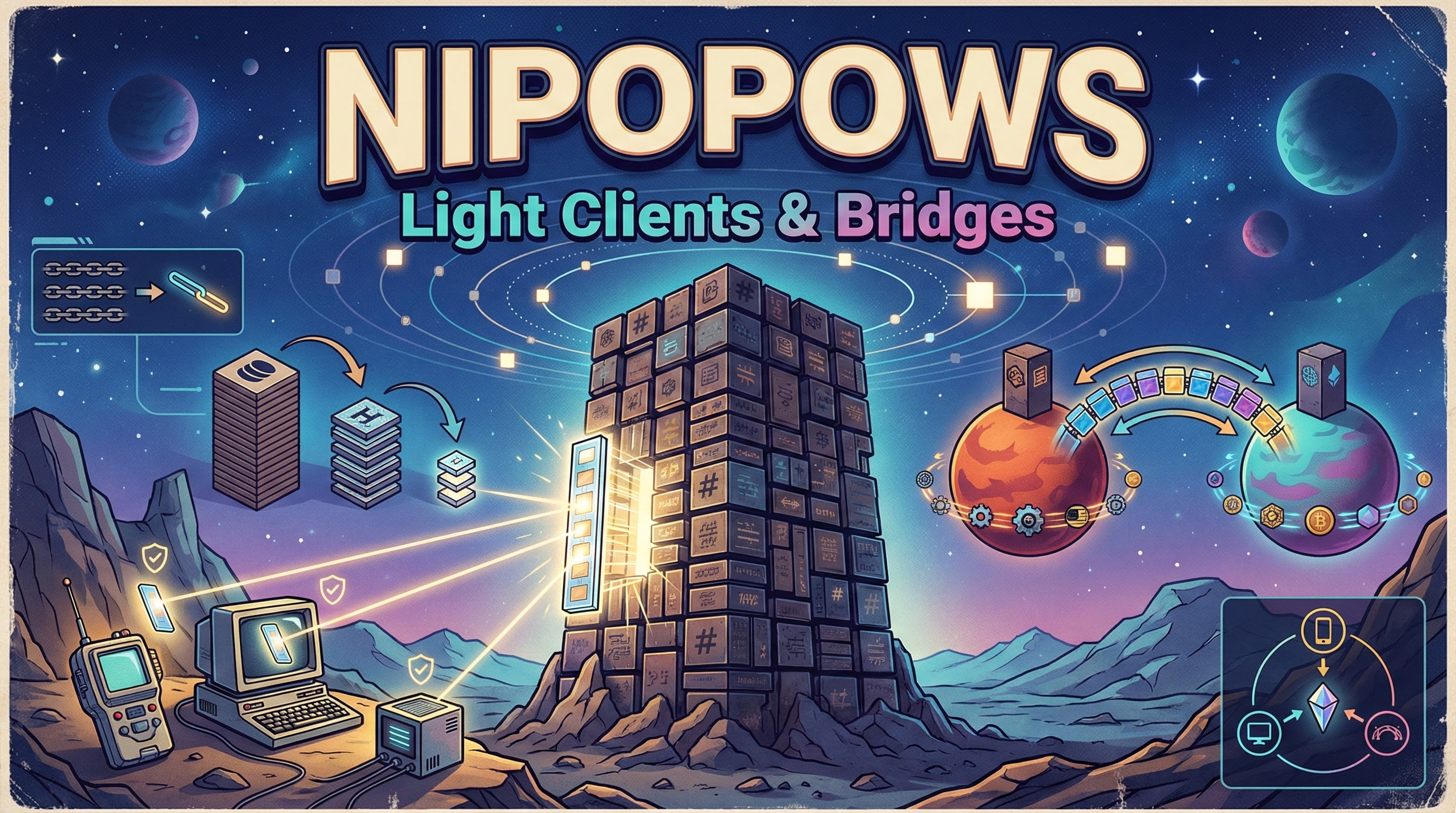
NiPoPoWs (Non-Interactive Proofs of Proof-of-Work) are cryptographic proofs that compress blockchain history. Instead of downloading gigabytes of blocks, light clients can verify the chain with just kilobytes of data. This enables true trustless light wallets, efficient cross-chain bridges, and sidechains - all without trusting third parties.
Explainer
Technology
How to get started with Ergo?
Start by getting a wallet (Nautilus for browser, Terminus for mobile). Back up your seed phrase securely offline. Get some ERG from an exchange (Gate.io, KuCoin) or DEX (Spectrum). Make a test transaction. Then explore: try DeFi on Spectrum, check out NFTs, or dive into the technology if you're a builder.
How-to
Getting Started