Consensus & Mining
Beginner
What is
Consensus?
The process by which a blockchain network agrees on the state of the ledger and validates transactions.
The process by which a blockchain network agrees on the state of the ledger and validates transactions. Consensus mechanisms include Proof-of-Work (PoW), Proof-of-Stake (PoS), and others. They ensure security, decentralization, and trustlessness.
Related Infographics


Related Articles
Frequently Asked Questions
Questions about Consensus
Common questions about this topic
What is storage rent on Ergo?
Storage rent is Ergo's solution to state bloat. Boxes (UTXOs) that remain unspent for 4+ years can have a small fee deducted by miners. This incentivizes cleaning up unused state, provides long-term miner revenue after emission ends, and keeps the blockchain sustainable. Lost coins eventually return to circulation instead of being locked forever.
Explainer
Technology
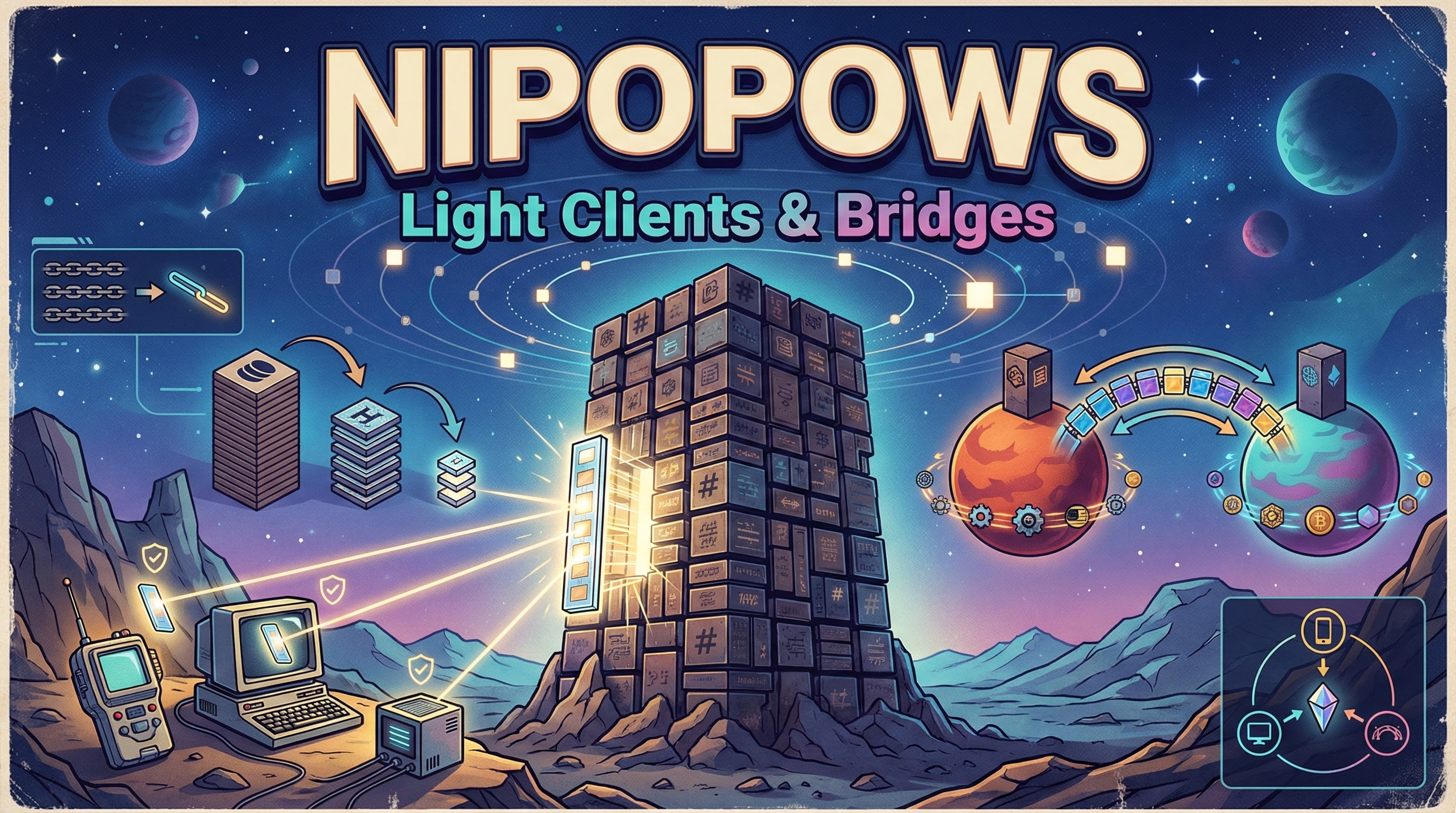
What are NiPoPoWs and why do they matter?
NiPoPoWs (Non-Interactive Proofs of Proof-of-Work) are cryptographic proofs that compress blockchain history. Instead of downloading gigabytes of blocks, light clients can verify the chain with just kilobytes of data. This enables true trustless light wallets, efficient cross-chain bridges, and sidechains - all without trusting third parties.
Explainer
Technology
What is storage rent on Ergo?
Storage rent is Ergo's mechanism for long-term sustainability. Boxes (UTXOs) that remain unspent for ~4 years pay a small fee, which goes to miners. This prevents state bloat, recirculates lost coins, and ensures miners have income even after emission ends. It's like paying rent for blockchain storage space.
Explainer
Technology
How do miners earn money on Ergo?
Ergo miners earn from three sources: block rewards (newly minted ERG), transaction fees, and storage rent. Block rewards decrease over time according to the emission schedule, but storage rent ensures long-term income even after all ERG is mined. Most miners use pools for consistent payouts.
How-to
Mining